

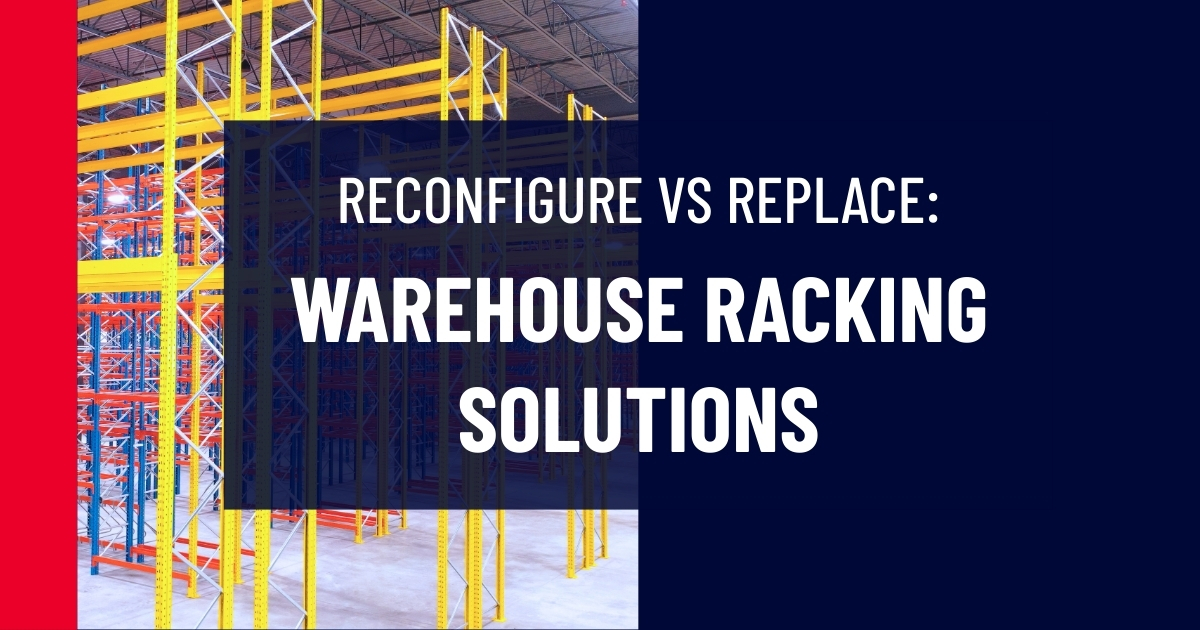
Running out of warehouse space doesn’t always mean you need new racks. Many operations can save time, money, and disruption by reconfiguring their current storage systems. But how do you know whether an adjustment is enough, or if a full upgrade is the smarter choice? This guide breaks it down so you can make an informed choice about your warehouse racking solutions.
Why Reassessing Your Warehouse Racking Solutions Matters
Your operation’s needs are constantly changing, whether it’s:
- Growth in inventory
- New product sizes or weights
- Workflow bottlenecks
- Safety and compliance requirements
Neglecting to review your storage racks can lead to inefficient layouts, increased costs, and potential hazards.
Tip: Even small modifications to your racks can dramatically improve storage capacity and picking speed.
What Is Racking Reconfiguration?
Reconfiguration means moving, adjusting, or repurposing racking or shelving systems to better suit your facility’s requirements. Examples include:
- Adjusting beam levels for new product heights
- Changing aisle widths for forklifts
- Reorganizing bays to improve picking flow
This approach is often faster, more cost-effective, and less disruptive than a full upgrade, but only when the current pallet racks are structurally sound.
When Reconfiguration Makes Sense
Consider adjusting if:
- The racks are structurally sound with no major damage
- Load requirements haven’t significantly changed
- Your facility footprint remains the same
- You’re working with budget or timeline constraints
Tip: Always conduct a professional inspection before moving or altering your storage racks.
When Replacement Is the Smarter Choice
A full system upgrade may be necessary if:
- Racks are damaged or outdated
- Load requirements have changed significantly
- You’re implementing automation or different material handling equipment
- Compliance or safety upgrades are needed
- Expansion involves new facility space or layout changes
Tip: If adjustments won’t meet long-term needs or safety standards, an upgrade is the better investment for your warehouse racking solutions.
Quick Rack Assessment Questions
Before deciding, ask yourself:
- Are your current racks still compliant with Canadian safety standards?
- Have your SKU sizes or weights changed?
- Will new forklifts or equipment impact aisle or beam spacing?
- Can your current layout support future growth?
Answering these will make it much easier to decide between reconfiguration and replacement.
Case Example
To effectively store their comprehensive electrical inventory, an Edmonton-based distributor needed a complete overhaul of their old storage. The NAS Group designed and installed a custom pallet racking system that optimized space and improved their cable management. You can read the full case study here: Enhancing Cable Management for an Electrical Distributor in Edmonton, AB.
Next Steps & Professional Assessment
Deciding whether to reconfigure or replace your racking can be complex. Contact us to schedule a racking assessment to ensure your warehouse racking solutions are secure, compliant, and optimized for performance.
For additional guidance on reassessing your storage layout, check out our older post: When to Reassess, Reconfigure, or Change Your Pallet Racking Systems.
FAQs: Reconfiguring vs. Replacing Warehouse Racking
What does it mean to reconfigure warehouse racks?
Reconfiguring means adjusting your current racks to better fit your storage requirements, like changing beam heights, moving racks, or widening aisles, without replacing the entire system.
How can I tell if my racks need to be replaced instead of reconfigured?
If your racks are damaged, outdated, can’t handle new loads, or you’re upgrading to automation or new equipment, replacement is usually the safer and more cost-effective option.
Will reconfiguring racks really improve efficiency?
Yes! Small adjustments can improve workflow, increase storage capacity, and make picking and stocking faster, all without the downtime or cost of a full replacement.
Do I need a professional inspection before making changes?
Definitely. A professional inspection ensures your racks are safe, structurally sound, and compliant with Canadian safety standards before any reconfiguration or replacement.
How often should I review my storage layout?
Reassess your racks whenever inventory, product sizes, or equipment changes, or at least on a regular schedule, to keep your operations safe, optimized, and ready for growth.
Do I need a permit to reconfigure?
Yes, reconfiguration typically requires a permit. Requirements vary by municipality and depend on factors like layout changes, rack height, and stored materials, so consulting a qualified professional is recommended.