

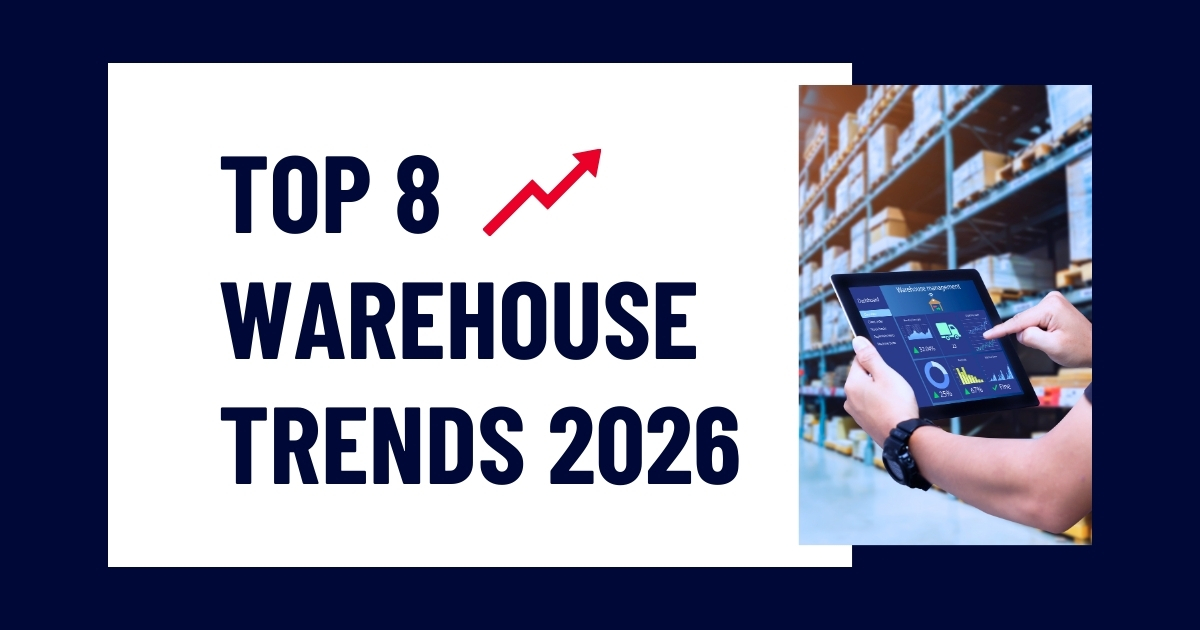
As storage facilities evolve in 2026, businesses are embracing new technologies, workforce strategies, and eco-friendly practices to stay competitive. Here are the top warehouse trends shaping facility operations this year.
1. Workforce Development Takes Priority in Warehouses
Attracting and retaining skilled employees is more important than ever. Companies are investing in training programs and career development to build a resilient, high-performing team. A strong workforce is the backbone of efficient distribution operations.
2. Vertical Storage Solutions Continue to Rise in 2026
Maximizing space is critical as facility footprints remain limited. Vertical storage solutions, including mezzanines, high-density racking, and modular shelving, allow centers to increase capacity while improving warehouse efficiency and inventory management.
3. E-Commerce Drives Warehouse Changes in 2026
The growth of online retail is reshaping fulfillment operations. Distribution centers are redesigning layouts, streamlining pick-and-pack processes, and leveraging automated storage systems to meet customer demands.
Learn how an e-commerce cooking store sped up fulfillment of small and bulky items across multiple pick levels in our case study.
4. Flexible Warehouse Solutions Take Priority Over Ownership
Businesses are focusing on adaptable storage systems, such as leasing and mixed fleet models. These approaches allow faster response to changes in demand while reducing capital-intensive investments.
5. Safe Technology Becomes Standard in Facilities
Protecting employees is a baseline expectation. From forklift collision sensors to automated safety checks in storage and racking systems, businesses are implementing tech that ensures safer operations and reduces risk.
6. AI is Essential in Warehouse Operations
Artificial intelligence (AI) is transforming warehouses into smart, automated facilities. AI supports faster decision-making, minimizes errors, and improves warehouse productivity, allowing companies to optimize workflows and inventory control.
7. Digital Transformation Enhances Warehouse Visibility
Connected systems and intelligent software provide real-time insights into inventory, equipment, and workflow processes. Warehouse technology and automation help reduce mistakes, improve control, and allow facilities to respond quickly to changing demands.
8. Sustainability Shapes Warehouse Equipment Choices
Connected systems and intelligent software provide real-time insights into inventory, equipment, and workflow processes. Warehouse technology and automation help reduce mistakes, improve control, and allow facilities to respond quickly to changing demands.
Looking Ahead to 2026
This year is shaping up to be transformational for distribution centers and warehouses. By combining skilled teams, intelligent storage solutions, warehouse automation, and eco-friendly equipment, businesses can enhance efficiency, safety, and adaptability.
Keeping up with these trends doesn’t have to be overwhelming. Explore how the right storage solutions can help your operations. Contact Us today!
FAQs: 2026 Warehouse Trends
How can warehouses stay competitive in 2026?
By combining skilled teams, flexible storage solutions, connected technology, and sustainable practices, warehouses can improve warehouse operations, safety, and adaptability to changing demands.
What technology will make the biggest impact in warehouses?
Connected fleets, telematics, intelligent software, and automated warehouse systems enhance visibility, reduce errors, and streamline workflows.
How are sustainability efforts turning into advantages?
Electric forklifts, low-emission vehicles, energy-efficient lighting, and rooftop solar reduce environmental impact, lower operating costs and give facilities a competitive edge.
What challenges do warehouses face with e-commerce growth?
Faster order fulfillment, larger SKU ranges, and higher shipment frequency require optimized layouts, smart warehouse storage systems, and scalable automation solutions.