
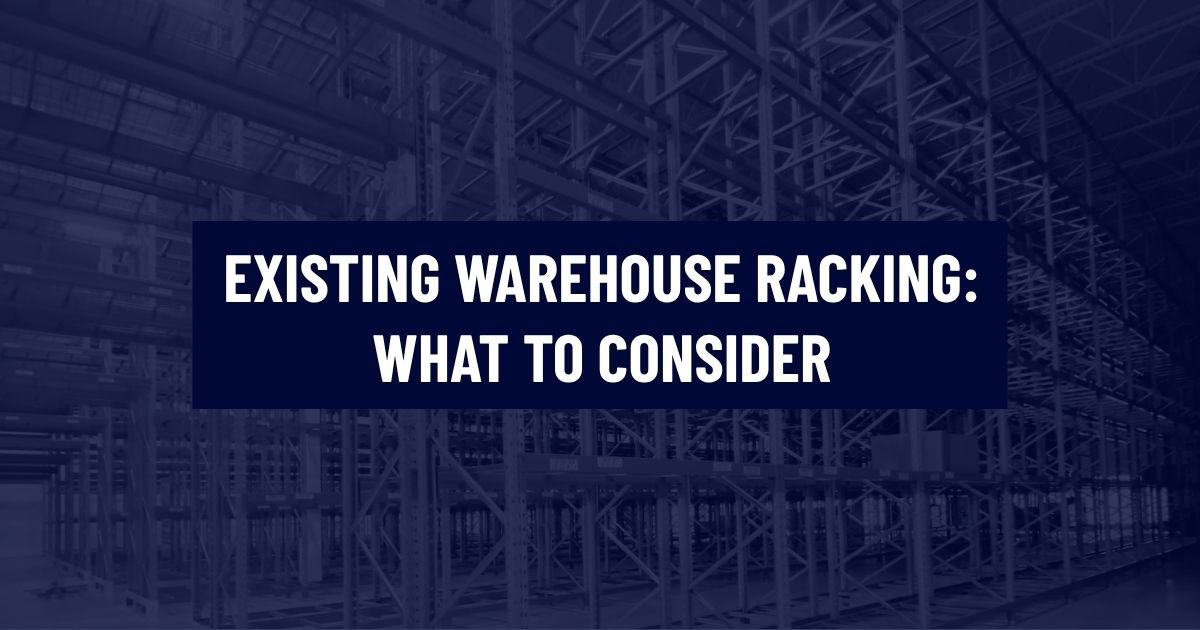
Moving into a warehouse with pallet racking already installed can simplify the setup process and lower upfront costs. However, before incorporating existing warehouse racking into your operation, it is important to understand its condition, capabilities, and suitability for your business.
For tenants evaluating industrial properties, a closer look at the racking can help identify potential costs and avoid unexpected complications after moving in.
Is the Existing Racking Right for Your Operation?
Warehouse racking is designed around specific storage needs, including product dimensions, pallet weights, material handling equipment, and available floor space. A layout that worked well for the previous occupant may not meet the needs of the next business.
Before deciding to keep an existing system, consider the following:
- Storage needs: Do the rack dimensions, beam elevations, and load capacities accommodate your inventory?
- Equipment compatibility: Are the aisles wide enough for your forklifts or other material handling equipment?
- System condition: Are the frames, beams, connections, and anchors in suitable condition for continued use?
- Available documentation: Are engineering drawings, load ratings, permits, and previous inspection records available?
- Building requirements: Will the proposed storage arrangement meet applicable permitting, structural, and fire protection requirements?
These considerations can help determine whether the existing installation can be retained as is, needs modifications, or would be better replaced.
Account for More Than the Purchase Price
Even when racking is included with a lease, keeping it may involve costs for inspections, repairs, engineering, reconfiguration, or removal. Changes to storage heights, products, or layouts may also require a review of the building’s fire protection systems and structural loading conditions.
Assessing these factors early allows businesses to compare the total cost of retaining the existing racking with the cost of installing a new system. It also provides an opportunity to clarify responsibilities with the landlord before finalizing the lease.
Make Racking Part of Your Property Due Diligence
Existing storage equipment should be assessed before a lease is signed or a warehouse is occupied. A qualified rack inspection, a review of available technical documentation, and an assessment of operational needs can help identify any necessary repairs or modifications.
Tenants and landlords should also confirm who owns the equipment and agree on responsibility for maintenance, repairs, and removal at the end of the lease.
Taking these steps early can help businesses make informed decisions about their warehouse space and plan for a storage system that supports their operations.
Need Help Assessing Existing Warehouse Racking?
North American Steel (NAS) works with businesses, landlords, and commercial real estate professionals to assess and improve warehouse storage systems. Services include racking inspections, repairs, reconfiguration, and complete system redesigns.
For a more detailed look at the advantages, risks, and contractual considerations associated with inherited racking, read the original RENX article:
Inherited racking: asset or liability?
Contact our team to learn how North American Steel can help assess your existing racking and determine the best approach for your facility.